
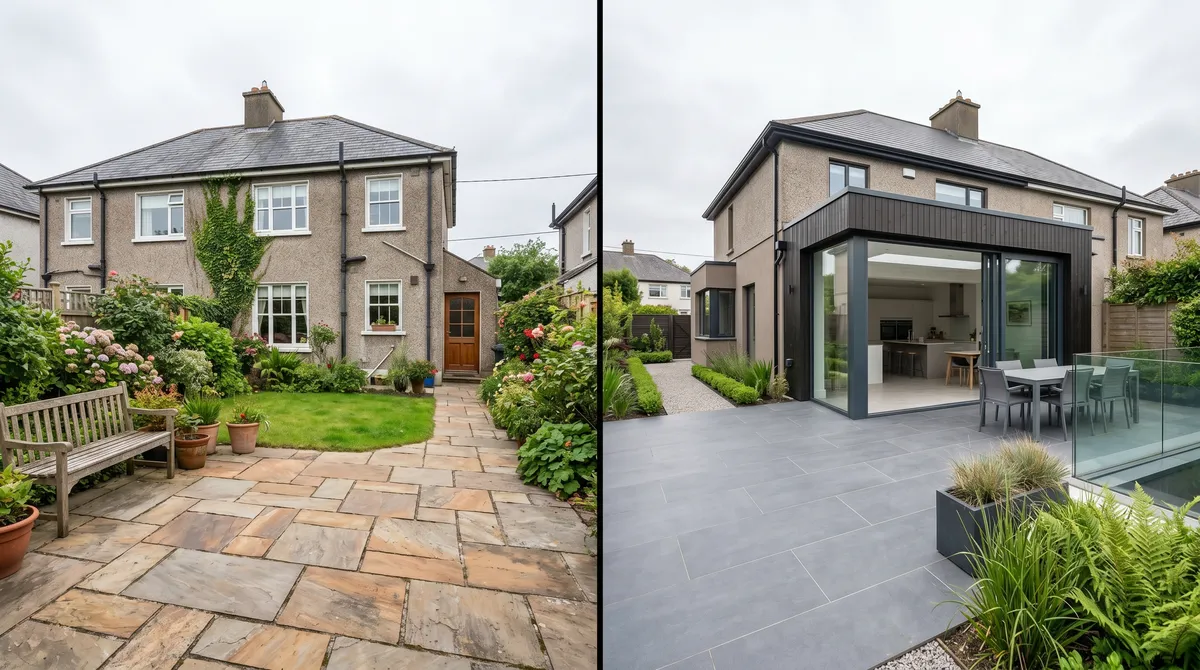
If you are planning to upgrade your back garden in Dublin this year, you have likely run into the ultimate paving debate: should you choose natural Indian Sandstone or modern Porcelain Paving?
Both are fantastic options that instantly add value to your property. But they look, act, and cost very differently. Living in Ireland means dealing with heavy rain, occasional frost, and damp, overcast conditions for a good chunk of the year. Your patio needs to look great, but it also needs to survive the Irish weather without becoming a slippery, moss-covered nightmare.
In this guide, we are going to break down the real, practical differences between Indian sandstone and porcelain paving. We'll look at costs, maintenance, slip resistance, and what really happens to these stones after a long, wet Dublin winter.
Quick Comparison: Sandstone vs. Porcelain
If you are short on time, here is a quick look at how both materials stack up against each other on the factors that matter most:
| Feature | Indian Sandstone | Porcelain Paving |
|---|---|---|
| Aesthetic | Natural, rustic, unique variations in every slab | Modern, uniform, clean lines, seamless finish |
| Maintenance Level | Medium (requires periodic sealing & power washing) | Very Low (virtually wipe-clean) |
| Porosity (Water Absorption) | Porous (absorbs water, can grow moss if unsealed) | Non-porous (impervious to water and frost) |
| Slip Resistance | Good (natural riven texture provides grip) | Excellent (must look for R11 slip rating) |
| Material Cost | Generally Lower | Generally Higher |
| Installation Complexity | Straightforward, traditional laying method | Complex (requires specialist cutting blades & priming slurry) |
Dealing with the Irish Climate (The Biggest Factor)
When choosing a patio material in Ireland, the weather should be your main concern. A material might look stunning in a Mediterranean villa, but how does it hold up in a damp, north-facing garden in Swords or Blackrock?
Why Porcelain is the "Set and Forget" Option
Porcelain is manufactured in a kiln at incredibly high temperatures. This process makes it incredibly dense and entirely non-porous. It simply does not absorb water. Because moisture cannot get inside the tile, it is completely immune to the freeze-thaw cycles that can crack cheaper concrete slabs during a hard frost.
More importantly for Irish homeowners, because porcelain doesn't hold water, algae, moss, and black spot lichen have nothing to cling to. If your garden doesn't get much sunlight, porcelain is a lifesaver. You won't spend your spring weekends scrubbing green slime off your patio—a quick mop or a light hose down is usually all it takes to bring it back to a brand-new look.
Managing Sandstone in Damp Weather
Indian sandstone is a natural sedimentary rock. This means it is porous—it breathes and absorbs water. In the height of summer, a sandstone patio looks spectacular as it dries out and shows off its natural veining. However, during a wet Irish winter, that porosity means it holds onto moisture.
If your patio is in a shaded area, a damp sandstone surface can eventually become a breeding ground for algae and moss. Does this mean you shouldn't buy sandstone? Not at all. It just means you need to be prepared for a bit of maintenance. By applying a high-quality breathable sealant shortly after installation, you can dramatically reduce water absorption, keeping the stone cleaner for much longer.
Need Help Choosing the Right Stone?
Our paving experts can visit your property, assess your garden's sunlight and drainage, and recommend the perfect material for your budget.
Aesthetic & Style: Matching Your Dublin Home
Maintenance aside, your patio needs to suit the character of your house. What looks good on a newly built modern extension might look completely out of place against a 100-year-old period red-brick home.
The Timeless Charm of Indian Sandstone
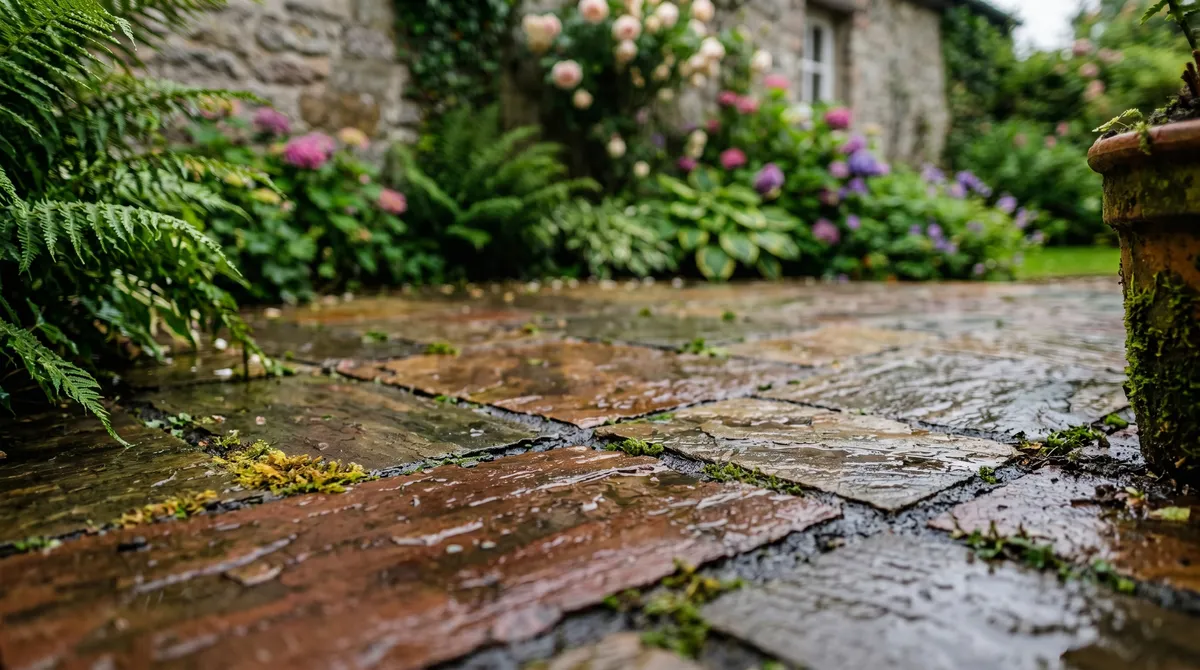
If you love character, warmth, and organic beauty, sandstone is hard to beat. Because it is carved straight from the earth, no two slabs are exactly alike. You get natural variations in colour, texture, and fossil marks. A traditional riven sandstone patio with mixed-size slabs brings a cottage-garden feel that pairs perfectly with traditional Irish homes, older properties, and lush, heavily planted gardens.
The Modern Flow of Porcelain Paving
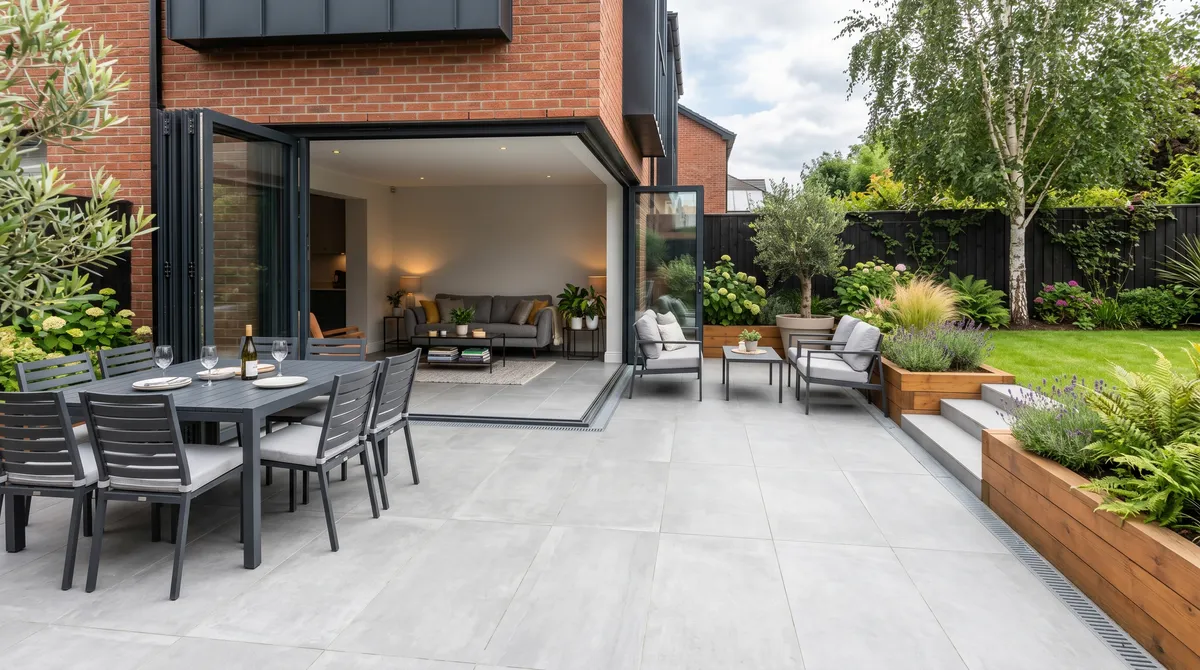
If your home has a contemporary design, perhaps with a new rear extension featuring large bifold or sliding doors, porcelain is the obvious choice. Porcelain tiles offer crisp, rectified edges that allow for very narrow grout lines, creating a sleek, uniform finish.
One of the biggest trends we see across Dublin is creating an "indoor-outdoor flow." Because porcelain is available in both standard indoor thickness and heavy-duty 20mm outdoor thickness, you can run the exact same tile from your kitchen straight out onto your patio. When the doors are open, it makes both your house and your garden feel twice as big.
Installation & Costs Explained
When you start pricing up your project, you will notice a difference in the quotes. Generally, a porcelain patio will cost you more than a sandstone patio. Let's look at why.
First, the manufacturing process of porcelain makes the material itself more expensive to buy than standard Indian sandstone. But the real difference comes down to the labour and installation process.
Laying sandstone is a traditional masonry skill. The stones are relatively easy to cut with standard masonry blades, and they adhere well to a standard mortar bed. Porcelain, on the other hand, is incredibly tough and brittle. It requires specialist diamond-tipped water saws to cut without chipping the edges. Furthermore, because porcelain is non-porous, it will not stick to a standard wet mortar mix. Every single porcelain tile must have a special priming slurry painted onto its underside before it is laid, otherwise, the tiles will simply pop loose after a few weeks. This meticulous process requires more time, specialist materials, and highly skilled labour.
Final Verdict: Which Should You Choose?
Both materials will give you a stunning patio, but they cater to very different homeowners.
- Choose Indian Sandstone if: You love the rustic, unique look of natural stone, you own a traditional style home, you have a slightly tighter budget, and you don't mind spending a Saturday afternoon once a year giving the patio a good power wash.
- Choose Porcelain Paving if: You want a sleek, modern finish, you are trying to match your indoor kitchen tiles to your garden, you have a damp or shaded garden prone to moss, and you are happy to pay a premium for a virtually zero-maintenance "set and forget" patio.
Ready to Transform Your Garden?
Whether you prefer the natural charm of sandstone or the sleek finish of porcelain, BG Paving & Landscaping has the expertise to lay it flawlessly. Get in touch today for a free, no-obligation quote.