
Why Porcelain Patios are Taking Over Dublin Gardens & Homes
Take a walk around modern residential developments in South Dublin—from Sandyford and Blackrock to Malahide and Swords—and you will witness a massive garden revolution. Homeowners are actively ripping up their old timber decking, poured concrete paths, and even traditional natural Indian sandstone to replace them with a striking, sleek surface: Premium Outdoor Porcelain Tiling.
Planning a Porcelain Patio in Dublin? Get a Free Site Survey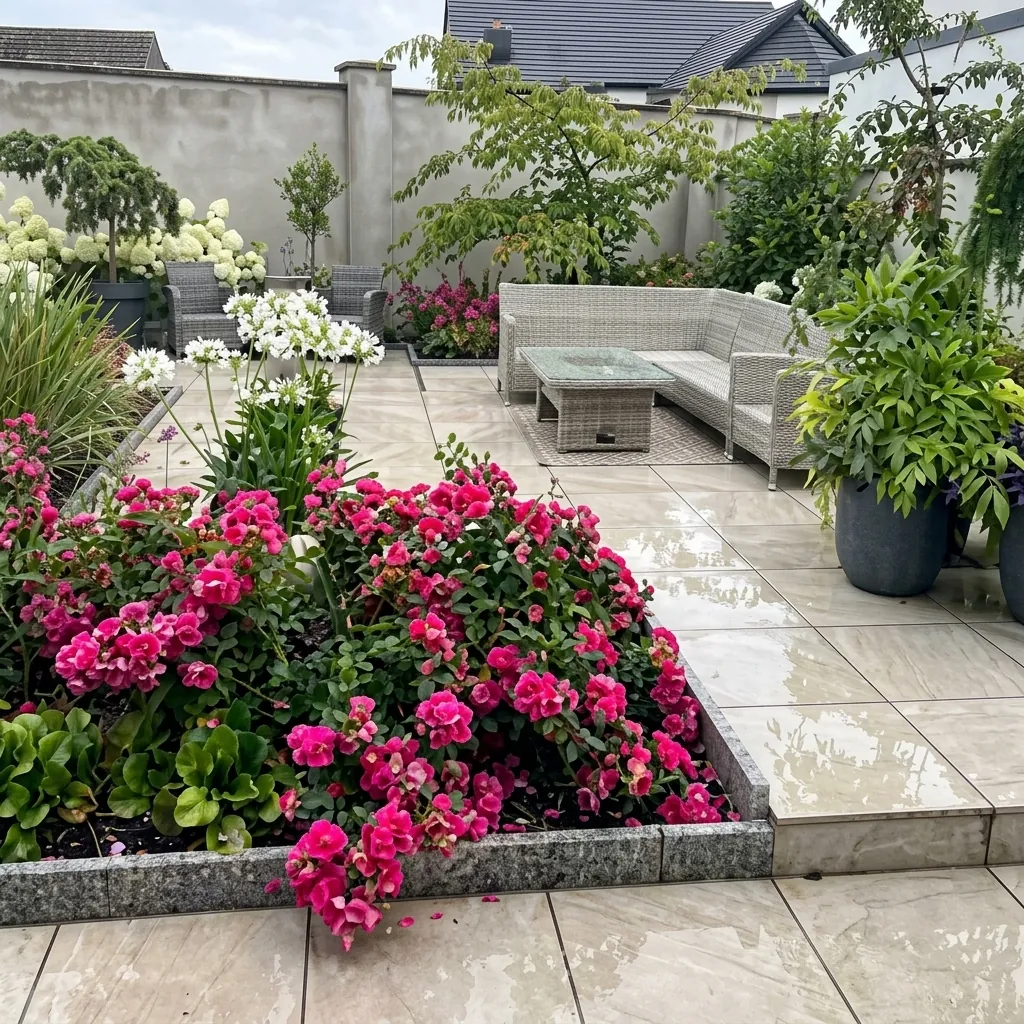
Historically, natural stone was the go-to patio material in Ireland. But as damp Irish winters set in, sandstone's porous weaknesses quickly expose themselves, leaving homeowners scrubbing slime off their paths every spring.
In this design and structural blog, we look at the engineering science and landscape aesthetics behind outdoor porcelain—showing why it has become the undisputed gold standard for beautiful, ultra-low-maintenance patios in Dublin.
R11 Slip Resistance: Safety in Wet Irish Weather
One of the most common questions Dublin homeowners ask our garden designers is: "Doesn't porcelain look slippery when wet?" This is a major misconception. While indoor porcelain is polished and glossy, outdoor porcelain tiles are specially engineered with a textured, abrasive micro-grip surface.
When selecting outdoor tiles in Ireland, look for a certified rating of R11 Anti-Slip. The R11 slip rating is the industry standard for safe outdoor foot traffic under wet conditions. It provides robust friction underfoot even during torrential rain, making it far safer and less slippery than wet timber deck boards or slimy natural sandstone.
Dublin Garden Design Trend: Inside-Out Harmony
The biggest architectural design trend in 2026 Dublin garden remodels is the "Inside-Out" flow. Modern home extensions are built with large sliding or bifold glass doors. By laying the exact same color, pattern, and size of porcelain tiles inside your kitchen and extending them directly onto your outdoor patio, you create a seamless visual plane.
When the bifold doors are opened, the boundaries of your home dissolve, making your kitchen and garden feel like a single, massive, continuous living space:
- Sleek Grey & Charcoal Tiles: 600mm x 600mm or large-format 900mm x 600mm tiles for a spacious clean feel.
- Integrated Retaining Walls: Matching brickwork border borders with granite caps.
- Minimalist Grout Lines: Using highly durable, weather-resistant resin grouts that do not wash away or crack.
The Non-Negotiable Groundwork: Slurry Bond Primer
Because porcelain has a zero-absorption surface, standard cement mortar cannot bind to it. If you lay porcelain tiles directly onto a wet mortar bed without special preparation, the tiles will simply slide around and pop loose under the first winter frost.
To ensure a lifetime structural bond, professional pavers must apply a specialized SBR cementitious slurry bond primer to the entire underside of every porcelain tile immediately before placing it onto the wet sand-and-cement mortar bed. The slurry primer acts as a structural adhesive, chemically fusing the vitrified porcelain tile to the concrete foundation.
Conclusion: The Modern Choice for Irish Homes
While premium Italian porcelain tiles cost slightly more per square metre than cheap concrete flags or natural sandstone, their zero maintenance, frost immunity, anti-slip safety, and luxurious aesthetic make them the ultimate, value-adding choice for Dublin homes.