
Sandstone vs. Porcelain Patios: Which is Best for Irish Gardens?
If you are planning to upgrade your back garden in Dublin this year, you have likely run into the ultimate paving debate: should you choose natural Indian Sandstone or modern Porcelain Paving?
Comparing Sandstone vs Porcelain for Your Dublin Home? Get a Free Survey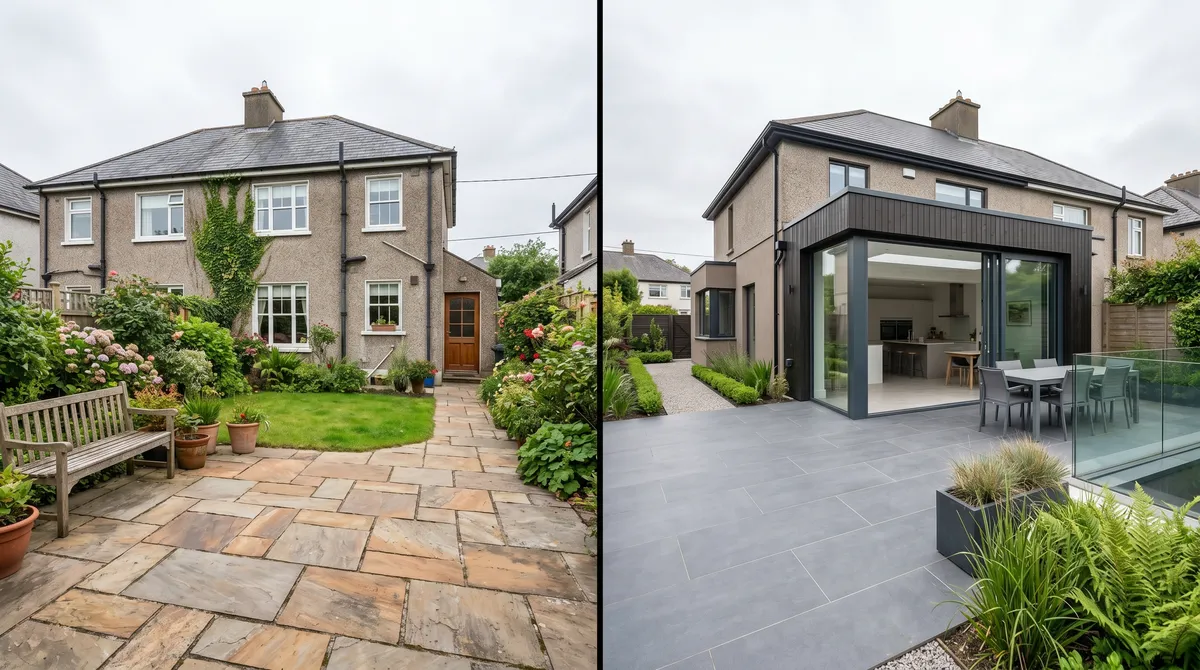
Both are fantastic options that instantly add value to your property. But they look, act, and cost very differently. Living in Ireland means dealing with heavy rain, occasional frost, and damp, overcast conditions for a good chunk of the year. Your patio needs to look great, but it also needs to survive the Irish weather without becoming a slippery, moss-covered nightmare.
In this guide, we are going to break down the real, practical differences between Indian sandstone and porcelain paving. We'll look at costs, maintenance, slip resistance, and what really happens to these stones after a long, wet Dublin winter.
Quick Comparison Matrix
| Feature | Indian Sandstone | Porcelain Paving |
|---|---|---|
| Aesthetic | Natural, rustic, unique variations in every slab | Modern, uniform, clean lines, seamless finish |
| Maintenance Level | Medium (requires periodic sealing & power washing) | Very Low (virtually wipe-clean) |
| Porosity (Water Absorption) | Porous (absorbs water, can grow moss if unsealed) | Non-porous (impervious to water and frost) |
| Slip Resistance | Good (natural riven texture provides grip) | Excellent (R11 slip rating required) |
| Material Cost | Generally Lower | Generally Higher |
| Installation Complexity | Straightforward traditional laying method | Complex (requires diamond blades & slurry primer) |
Dealing with the Irish Climate
Why Porcelain is the "Set and Forget" Option: Porcelain is manufactured in a kiln at high temperatures, making it non-porous. It simply does not absorb water. Because moisture cannot get inside the tile, it is completely immune to the freeze-thaw cycles that can crack cheaper concrete slabs during a hard frost. Algae, moss, and black spot lichen have nothing to cling to.
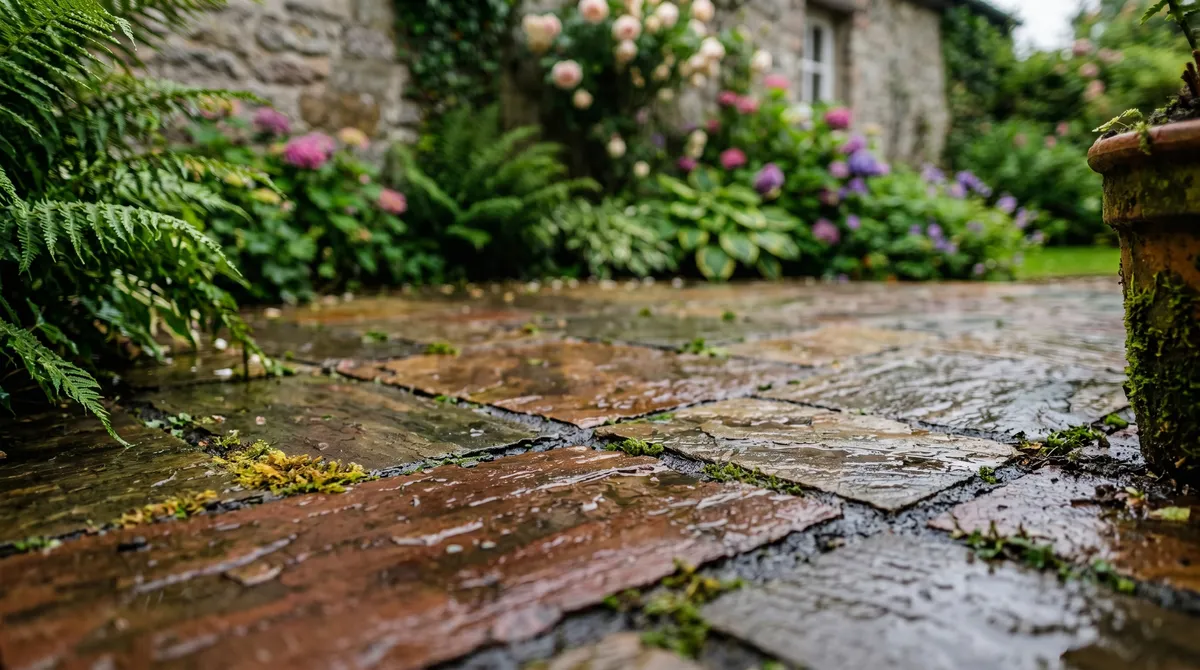
Managing Sandstone in Damp Weather: Indian sandstone is a natural sedimentary rock, meaning it is porous. In the height of summer, a sandstone patio looks spectacular as it shows off natural veining. However, during a wet Irish winter, porosity means it holds onto moisture. Applying a high-quality breathable sealant shortly after installation dramatically reduces water absorption.
Aesthetic & Style: Matching Your Dublin Home
The Timeless Charm of Indian Sandstone: If you love character, warmth, and organic beauty, sandstone is hard to beat. Natural variations in colour and riven texture bring a cottage-garden feel that pairs perfectly with traditional Irish homes, older properties, and heavily planted gardens.
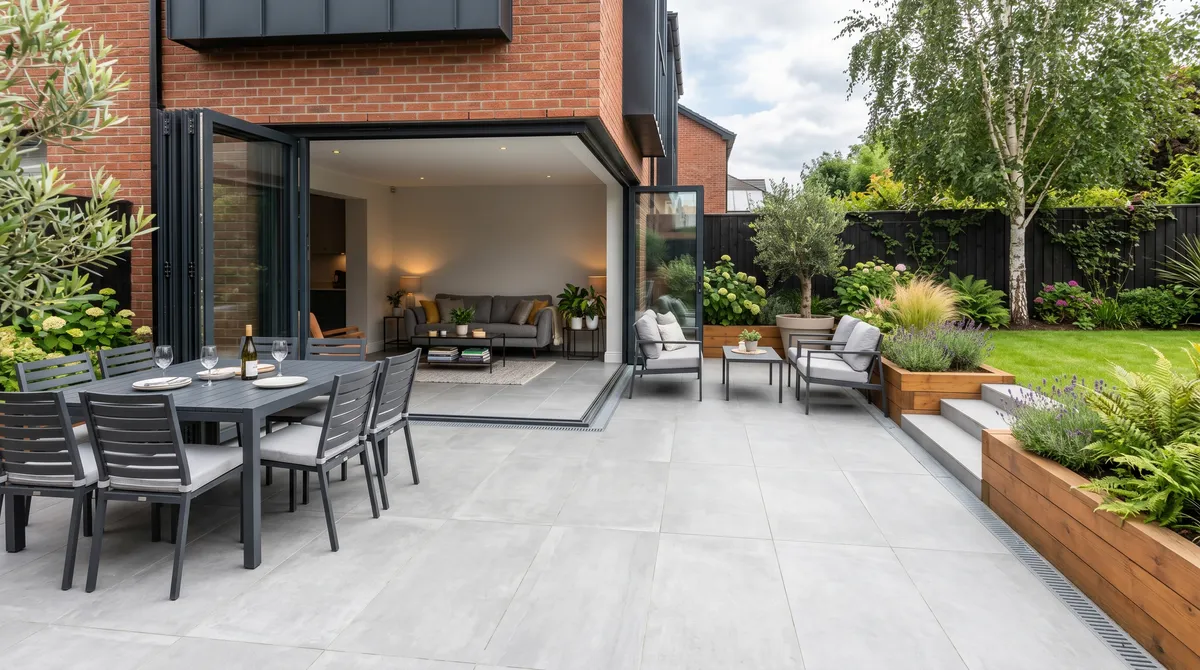
The Modern Flow of Porcelain Paving: If your home has a contemporary design with a new rear extension featuring bifold or sliding doors, porcelain is the obvious choice. Porcelain tiles offer crisp rectified edges for narrow grout lines, running the exact same tile from your kitchen straight out onto your patio.
Installation & Costs Explained
Laying sandstone is a traditional masonry skill. Sandstone adheres well to a standard mortar bed. Porcelain, on the other hand, is non-porous and will not stick to standard mortar. Every porcelain tile must have a special priming slurry painted onto its underside before laying, requiring specialist diamond-tipped saws and extra skilled labour.
Final Verdict: Which Should You Choose?
- Choose Indian Sandstone if: You love the rustic unique look of natural stone, own a traditional home, have a tighter budget, and don't mind annual power washing.
- Choose Porcelain Paving if: You want a sleek modern finish, are matching indoor kitchen tiles, have a shaded garden prone to moss, and want a zero-maintenance patio.