
Real Lawn Turf vs. Artificial Grass: Which is Better for Irish Gardens?
If you live in Ireland, you already know the struggle of maintaining a natural lawn. One week it is too wet to cut, the next week the kids have turned the goalmouth into a mud pit, and before you know it, winter arrives and the entire garden looks like a bog. It is exhausting.
Deciding Between Real Turf or Artificial Grass? Get a Free Site Survey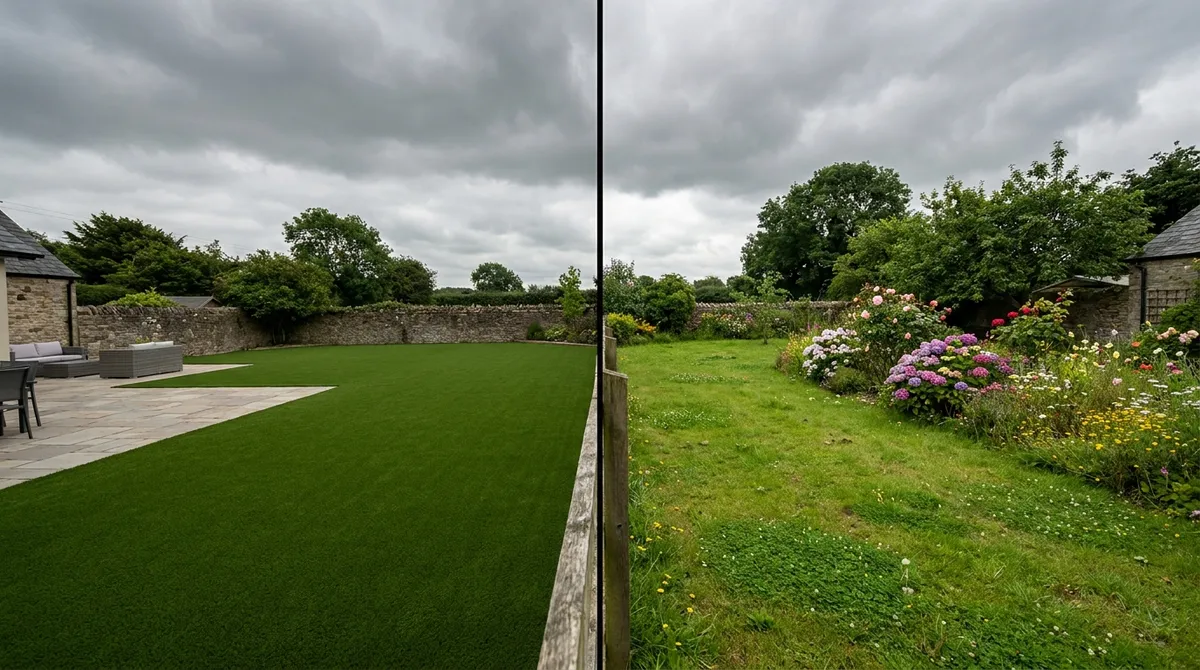
This endless battle against the damp Irish weather is exactly why so many homeowners across Dublin, Kildare, and Wicklow are ripping up their natural grass and replacing it with artificial turf. But is throwing away a living, breathing lawn really the best solution? Or are we sacrificing nature just to avoid pushing a lawnmower?
In this guide, we are going to give you the honest truth about both options. We will look at why artificial grass is brilliant for busy families, why real roll-out turf is vital for the environment, and how to choose the right surface for your specific lifestyle.
The Case for Artificial Grass (The Low-Maintenance Dream)
There is a reason artificial grass has exploded in popularity over the last ten years. For a lot of people, the convenience simply cannot be beaten.
Zero Mud, Zero Mowing: The biggest selling point of artificial grass is obvious: it requires almost no maintenance. You can finally throw away your lawnmower, your strimmer, and your weed killer. You don't have to spend your Saturday mornings cutting damp grass, and you certainly don't have to worry about muddy footprints being dragged across your clean kitchen floor.
Year-Round Usability for Families & Pets: Natural grass in Ireland usually becomes unusable between November and March. It gets waterlogged, and if the kids run on it, it gets destroyed. Artificial grass gives you your garden back for all 12 months of the year. It is highly durable, meaning kids can play football on it every single day without creating bald spots. It is also fantastic for dogs, as high-quality synthetic turf is highly resistant to digging and urine stains.
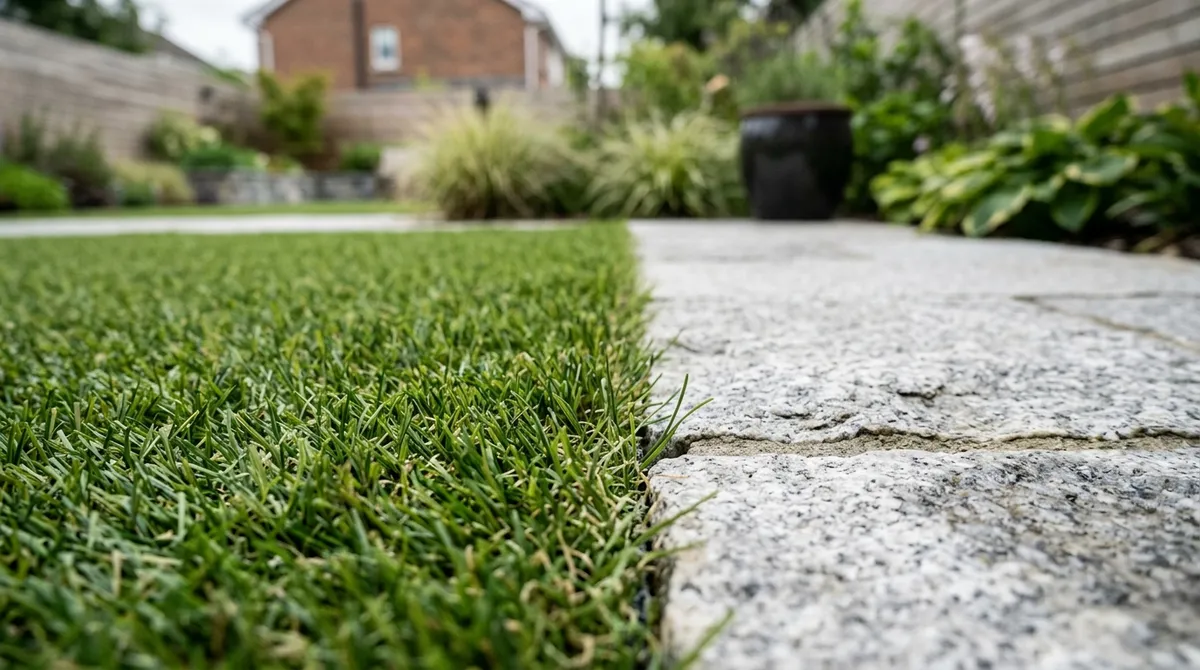
The Case for Real Lawn Turf (The Natural Choice)
While artificial grass sounds incredible on paper, real grass has a list of major benefits that synthetic plastic simply cannot replicate:
Environmental and Biodiversity Benefits: A natural lawn is a living ecosystem. It captures carbon dioxide from the air and produces clean oxygen. More importantly, the soil beneath a real lawn is home to worms, beetles, and countless insects essential for local birds. Artificial grass provides zero biodiversity value.
Natural Cooling Effect: During hot summer days, artificial grass gets surprisingly hot to the touch because synthetic materials absorb and radiate heat. Real grass does the exact opposite. Through transpiration, natural grass actually cools the air around it.
Authentic Scent and Feel: No matter how advanced synthetic grass gets, it will never replicate the soft, cool feel of walking barefoot on real grass or the fresh scent of freshly cut turf.
Direct Comparison Matrix
| Feature | Real Lawn Turf | Artificial Grass |
|---|---|---|
| Upfront Cost | Lower (Soil prep and turf rolls are cheap). | Higher (Requires extensive groundworks). |
| Maintenance | High (Mowing, edging, feeding). | Very Low (Occasional brushing). |
| Winter Usability | Poor (Gets boggy in Irish rain). | Excellent (Drains instantly, clean). |
| Lifespan | Forever (If fed and cared for). | 15 - 20 Years. |
| Eco-Friendliness | Excellent (Supports soil & wildlife). | Poor (Made from synthetic plastics). |
Summary: Which Should You Choose?
The choice comes down to your lifestyle. If you work long hours, have active kids or pets, and want a clean usable space without weekend chores, artificial grass is a brilliant investment. If you enjoy gardening, want to support local wildlife, and prefer a traditional natural aesthetic, real roll-out turf is the way to go.